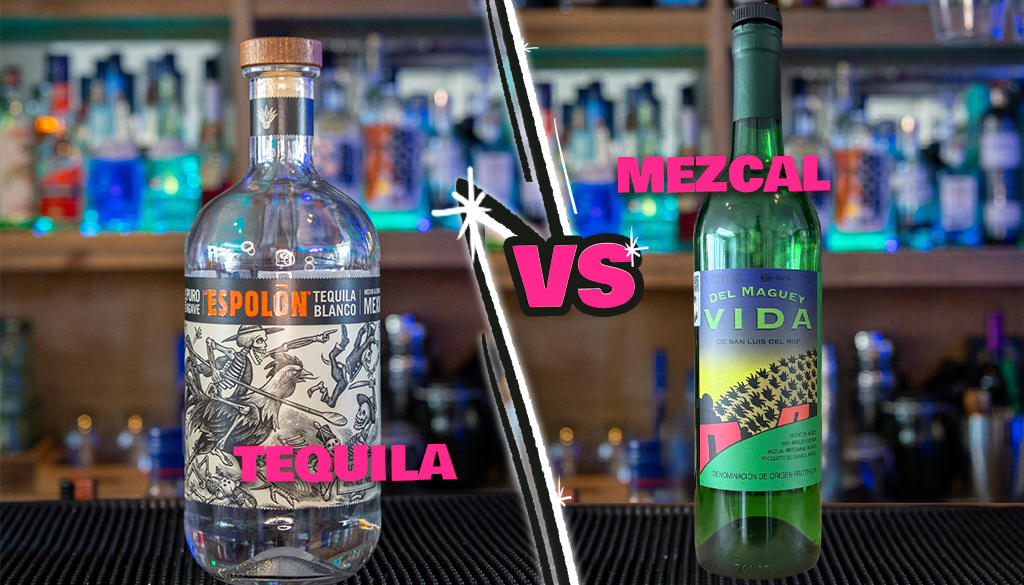
Tequila vs. Mezcal
What’s the Difference (And Why Does Mezcal Taste Like a Campfire?)
At Worthington’s Bar, we have a confession to make:
We’re still learning too.
We are by no means tequila or mezcal experts. We’re not master distillers. We’re not agave historians. And we definitely haven’t tasted every bottle Mexico has to offer.
What we are, is curious home bartenders who love making cocktails, trying new spirits, and occasionally falling down internet rabbit holes researching what we’re drinking.
This blog is the result of exactly that.
A combination of:
- Research
- Cocktail experimentation
- Conversations with bartenders
- And plenty of drinking in the name of science
So if you’re wondering what the difference is between tequila and mezcal, why mezcal tastes smoky, or whether one is “better” than the other, you’ve come to the right place.
Let’s dive in.
First Things First:
Tequila Is Mezcal… Kind Of
One of the most surprising things we learned is that tequila technically belongs to the mezcal family.
Think of it like this:
All bourbon is whiskey. But not all whiskey is bourbon.
The same idea applies here. All tequila is mezcal. But not all mezcal is tequila.
That’s because both spirits are made from agave. The difference comes down to:
- Which agave is used
- Where it’s produced
- And how it’s made
Those differences completely change the final flavor. And that’s why a tequila margarita and a mezcal margarita can feel like completely different cocktails.
What Is Agave?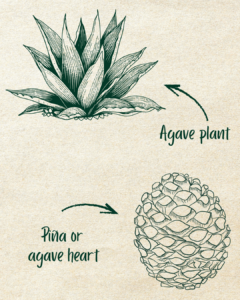
Before we go any further, let’s talk about the star of the show. Agave is a large succulent plant native to Mexico.
And yes, it looks a bit like an alien pineapple. The heart of the plant is called the piña because it resembles a giant pineapple once the leaves are removed. This is the part used to make both tequila and mezcal. Agave plants grow slowly. Very slowly.
Depending on the variety, they can take anywhere from:
- 6 years
- 8 years
- 10 years
- Sometimes over 20 years
before they’re ready to harvest. Which means every bottle starts with years of patience. Honestly, it’s pretty incredible when you think about it.
What Is Tequila?
Mexico’s Most Famous Spirit
Tequila is produced primarily in the state of
Jalisco.
To legally be called tequila, it must be made from:
Blue Weber Agave
And only Blue Weber Agave.
That’s one of the biggest differences between tequila and mezcal.
While mezcal can use dozens of agave varieties, tequila gets its flavor from a single species.
The agave hearts are usually steamed in industrial ovens before fermentation and distillation.
This creates a cleaner and more consistent flavor profile.
What Does Tequila Taste Like?
Most blanco tequilas offer flavors like:
- Citrus
- Black pepper
- Earthiness
- Fresh herbs
- Light sweetness
Some are grassy. Some are fruity. Some are peppery. But generally speaking, tequila tends to be:
- Clean
- Bright
- Crisp
- Easy to mix
Which explains why it became the backbone of the margarita.
What Is Mezcal?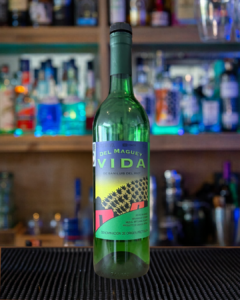
Tequila’s Smoky Cousin
Mezcal follows many of the same principles.
It’s still distilled from agave.
But the production process is very different.
Instead of steaming the agave hearts, traditional mezcal producers roast them underground in earthen pits.
Imagine:
- Hot stones
- Wood fires
- Covered pits
- Days of slow roasting
This process caramelizes the agave and infuses it with smoke.
That smoke becomes one of mezcal’s defining characteristics.
It’s the reason people often describe mezcal as:
- Smoky
- Earthy
- Rustic
- Complex
Or, in Britt’s case:
“Why does this taste like liquid cigarettes?”
A completely valid first reaction.
The Great Mezcal Debate at Worthington’s Bar
Our first experiences with mezcal couldn’t have been more different.
Joy fell in love with it almost immediately.
Years ago, her brother introduced her to mezcal at a cocktail bar.
The bartender made a Mezcal Old Fashioned.
One sip later, she was sold.
The smoke.
The depth.
The complexity.
It felt unlike anything she’d tried before.
Britt’s first reaction?
Less enthusiastic.
Very enthusiastic confusion.
The phrase “liquid cigarettes” was used.
And honestly?
If you’ve never had mezcal before, we kind of understand.
Mezcal can be shocking the first time you taste it.
But that’s also what makes it interesting.
Few spirits are as instantly recognizable.
Why Is Mezcal So Smoky?
This is probably the most common question people ask.
And the answer is surprisingly simple.
The smoke comes from the cooking process.
Tequila producers generally steam agave.
Mezcal producers traditionally roast agave over wood fires underground.
That roasting process creates:
- Smoke
- Caramelization
- Earthy flavors
- Roasted notes
It’s similar to the difference between:
A baked potato
And a potato cooked over a charcoal grill.
Same ingredient.
Completely different experience.
Tequila vs Mezcal in Cocktails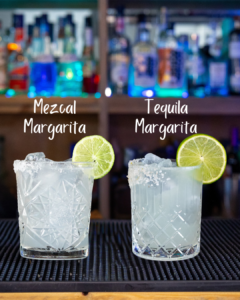
Which One Works Better?
The answer is annoyingly simple:
It depends.
Tequila is usually the easier mixer.
It plays well with:
- Citrus
- Tropical fruit
- Herbs
- Liqueurs
That’s why you’ll see tequila in endless cocktail recipes.
Mezcal tends to dominate. A little goes a long way. Its smoky character can completely transform a drink. Sometimes that’s amazing. Sometimes it steals the spotlight. Neither approach is better.
They’re just different.
The Margarita Test
If you really want to understand the difference, make these two cocktails side by side:
Classic Margarita
- Fresh
- Bright
- Citrusy
- Refreshing
Mezcal Margarita
The Mezcal Margarita is:
- Smoky
- Earthy
- Complex
- Slightly mysterious
Same structure. Same ingredients. Completely different personality.
This is one of the best and easiest cocktail experiments you can do at home.
The Mezcal We Used
In the Netherlands, mezcal isn’t nearly as easy to find as tequila.
There are fewer options and prices can climb quickly.
For our experiments, we used Del Maguey Vida.
We found it offered:
- Great quality
- Good availability
- Reasonable pricing
- Plenty of smoke without becoming overwhelming
It’s become our go-to bottle whenever we’re making mezcal cocktails.
Which One Should You Buy First?
If you’re completely new to agave spirits:
Start with tequila.
A good 100% Blue Agave tequila is approachable, versatile, and works in countless cocktails.
Great options include:
- El Jimador
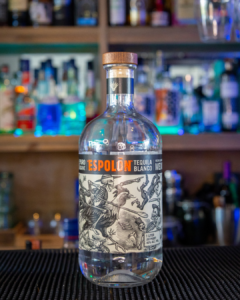
- Espolòn
- Herradura
Once you’re comfortable there?
Try mezcal.
You may love it immediately.
You may think it tastes like a campfire.
Either way, it’ll be memorable.
Best Cocktails for Tequila and Mezcal
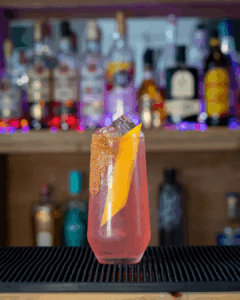
If you’re wondering where to start, cocktails are often the easiest way to explore both spirits.
Best Tequila Cocktails
Tequila shines in drinks like:
- Classic Margarita
- Paloma
- Tequila Sunrise
- Ranch Water
- Tommy’s Margarita
Its clean, bright flavor pairs beautifully with citrus and fresh ingredients.
Best Mezcal Cocktails
Mezcal works best when you want a little more depth.
Some classics include:
- Mezcal Margarita
- Oaxaca Old Fashioned
- Mezcal Negroni
- Mezcal Sour
- Naked & Famous
The smoke adds a completely different dimension to familiar cocktails.
Our Recommendation?
Make both a Classic Margarita and a Mezcal Margarita side by side.
It’s the fastest and most delicious way to understand the difference.
Final Thoughts
If there’s one thing we’ve learned while exploring tequila and mezcal, it’s this:
Neither spirit is better. They’re just different. Tequila is bright, clean, and approachable. Mezcal is smoky, bold, and full of personality. Some days we’re craving a fresh classic margarita. Other days we’re reaching for a mezcal margarita and embracing the campfire vibes.
The best part?
You don’t have to pick a side. Try both. Experiment. Make cocktails. Figure out what you enjoy. That’s exactly what we’re doing. And honestly, that’s half the fun.
From our home bar to yours,
Cheers 🍸🌵✨
Tequila vs Mezcal FAQ
What is the difference between tequila and mezcal?
The biggest difference comes down to the agave used and how it’s produced.
Tequila can only be made from Blue Weber Agave and is primarily produced in specific regions of Mexico, most notably Jalisco.
Mezcal can be made from many different agave varieties and is traditionally produced by roasting the agave hearts in underground pits before fermentation and distillation.
That roasting process is what gives mezcal its famous smoky flavor
Is tequila stronger than mezcal?
Not necessarily.
Most tequilas and mezcals are bottled at similar alcohol percentages, usually around 40% ABV.
The reason mezcal often feels stronger is because of its bold, smoky flavor profile.
Your brain tends to associate those intense flavors with a higher alcohol content, even when the alcohol percentage is similar.
Why does mezcal taste smoky?
The smoke comes from the cooking process.
Traditional mezcal producers roast agave hearts in underground pits lined with hot stones and wood fires.
As the agave slowly cooks, it absorbs smoky flavors that remain throughout the distillation process.
Tequila, on the other hand, is usually made using steamed agave, resulting in a cleaner and less smoky spirit.
Is all tequila mezcal?
Technically, yes.
Tequila is a type of mezcal because both spirits are made from agave.
However, not all mezcal is tequila.
Think of it like this:
- All bourbon is whiskey
- Not all whiskey is bourbon
The same principle applies to tequila and mezcal.
Which is better for margaritas: tequila or mezcal?
That depends on the kind of margarita you enjoy.
A tequila margarita is typically:
- Bright
- Citrusy
- Crisp
- Refreshing
A mezcal margarita tends to be:
- Smoky
- Earthy
- More complex
- Slightly richer
At Worthington’s Bar, we love both. A classic margarita is hard to beat on a sunny afternoon, while a mezcal margarita is perfect when you’re looking for something with a little more depth.
Does mezcal always taste smoky?
Most mezcals have some level of smokiness, but not all are intensely smoky.
The amount of smoke depends on:
- The production method
- The agave variety used
- The producer’s style
Some mezcals are bold and campfire-like, while others are surprisingly subtle and balanced.
What is the best tequila for margaritas?
The best tequila for margaritas is a quality blanco tequila made from 100% Blue Agave.
Some excellent options include:
- El Jimador Blanco
- Espolòn Blanco
- Herradura Blanco
- Olmeca Altos Plata
You don’t need the most expensive bottle. A good-quality blanco tequila with fresh agave character will usually outperform an expensive sipping tequila in a cocktail.
What is the best mezcal for beginners?
For people just getting started with mezcal, we often recommend Del Maguey Vida.
It’s one of the bottles that helped us fall in love with mezcal because it offers:
- Noticeable smoke
- Good balance
- Great cocktail performance
- Reasonable pricing
It’s approachable enough for newcomers while still showcasing what makes mezcal special.
Can I replace tequila with mezcal in any cocktail?
Usually, yes.
But the result will taste very different.
Replacing tequila with mezcal adds:
- Smoke
- Earthiness
- Extra complexity
In some cocktails, that’s incredible.
In others, it can overpower the other ingredients.
Our advice?
Experiment.
Some of our favorite discoveries started with a simple:
“What happens if we use mezcal instead?”
Is mezcal healthier than tequila?
Not really.
Both spirits have similar calorie counts and alcohol content.
Neither should be considered “healthy,” but when enjoyed responsibly, both can be part of a balanced lifestyle.
The most important factor is always moderation, not whether the bottle says tequila or mezcal.
What cocktails can you make with mezcal?
Mezcal works brilliantly in a wide range of cocktails, including:
- Mezcal Margarita
- Oaxaca (also known as a Mezcal) Old Fashioned
- Mezcal Paloma
- Mezcal Negroni
- Mezcal Sour
One of Joy’s personal favorites remains the Mezcal Old Fashioned, the cocktail that started her mezcal obsession in the first place.
Why is mezcal often more expensive than tequila?
Many mezcals are produced in smaller batches using traditional methods and agave varieties that take many years to mature.
Some agave plants require over a decade before they can be harvested.
Combined with labor-intensive production methods, this often results in higher prices compared to mass-produced tequila.