The Martinez
The Martini’s Sophisticated Ancestor
Today we’re diving into one of the most important (and criminally underrated) classics in cocktail history: the Martinez cocktail.
Now here’s the fun part…
If you’ve ever sipped a Martini.
If you’ve ever ordered a Manhattan.
If you’ve ever felt vaguely fancy holding a coupe glass…
Congratulations; you’re already part of the Martinez family tree whether you realized it or not.
The Martinez sits right at the turning point of classic mixology. It’s the delicious historical bridge between the sweeter 1800s cocktail style and the drier, sharper drinks that would later dominate cocktail bars around the world.
And honestly? We think it deserves way more modern love.
This cocktail is:
- Smooth but layered
- Spirit-forward but welcoming
- Slightly sweet but beautifully balanced
- Deeply classic with just enough personality
It has that unmistakable old-school cocktail energy, the kind that makes you feel like you should be wearing something slightly more expensive than you currently are.
At Worthington’s Bar, we have a soft spot for drinks like this. The ones with history. The ones with structure. The ones that quietly remind you that great cocktails didn’t just appear overnight, they evolved.
So yes… today we’re properly nerding out.
And trust us, the Martinez cocktail is absolutely worth the deep dive.
The History of the Martinez
The Martinez isn’t just another dusty classic; it’s widely considered one of the most important stepping stones in the evolution of the modern cocktail.
Long before ultra-dry Martinis dominated cocktail bars, drinkers in the late 1800s had a very different palate. The Golden Age of Cocktails (roughly 1860–1920) leaned heavily toward drinks that were:
- More aromatic
- More vermouth-forward
- Slightly sweeter
- Built for slow, elegant sipping
And the Martinez fits that moment in history perfectly.
The California Origin Story
Most origin stories place the birth of the Martinez in the late 19th century in California, often linked to the town of Martinez.
The most popular legend goes like this:
A traveler stopped at a bar on the way to San Francisco and asked for something special before continuing his journey. The bartender mixed up a new gin-and-vermouth drink… and the Martinez was born.
Is it 100% historically verified?
Not entirely.
But like many classic cocktail stories, the myth is part of the charm, and the timeline checks out.
The Jerry Thomas Connection
Where things get more concrete is with Jerry Thomas, often called the godfather of American bartending.
In his influential 1887 book, The Bar-Tender’s Guide, Thomas published a recipe for a drink called the “Martinez Cocktail.”
That matters. A lot.
Because once a drink appears in print during this era, it’s a strong signal that it was already circulating in bars and saloons. Thomas wasn’t always inventing drinks, he was often documenting what working bartenders were already making.
Which tells us something important:
👉 The Martinez was very likely already popular before 1887.
A Cocktail at the Turning Point
To really appreciate the Martinez, you have to understand where it sits on the cocktail timeline.
In the mid-1800s, the dominant template was the cocktail in its original sense, think spirit, sugar, water, and bitters (hello, Old Fashioned energy).
But bartenders began experimenting.
They started adding:
- Fortified wines (like vermouth)
- Liqueurs
- More aromatic modifiers
- More layered builds
This shift gave birth to a new generation of drinks, including the Manhattan… and shortly after, the Martinez.
The Martinez represents a transitional moment:
- Still rich and vermouth-forward like 19th-century drinks
- But clearly moving toward the drier, more spirit-focused future
How the Martinez Led to the Martini
Here’s where things get especially interesting for cocktail nerds (hi, hello, welcome).
Over time, drinkers’ preferences began shifting toward drier profiles. Bartenders gradually:
- Reduced the sweetness
- Swapped sweet vermouth for dry vermouth
- Simplified the build
- Leaned harder into the gin
And step by step… the modern Martini was born.
You can almost taste that evolution when you sip a Martinez today.
It still carries:
- The warmth of the 1800s style
- The aromatic richness of early vermouth cocktails
- The structural DNA of the Martini family
It’s not just a drink, it’s a snapshot of cocktail history mid-evolution.
Why the Martinez Still Matters
The Martinez deserves more modern love not just because it tastes fantastic (it does), but because it captures a pivotal shift in drinking culture.
It shows us:
- How the Golden Age shaped modern classics
- How vermouth became a defining cocktail ingredient
- How the Martini family evolved
- How bartender creativity transformed the original cocktail formula
When you stir up a Martinez, you’re not just making a drink.
You’re recreating one of the key evolutionary moments in the entire cocktail canon.
And honestly?
That’s exactly the kind of beautiful cocktail nerdery we live for at Worthington’s Bar. 🍸✨
What Is a Martinez Cocktail?
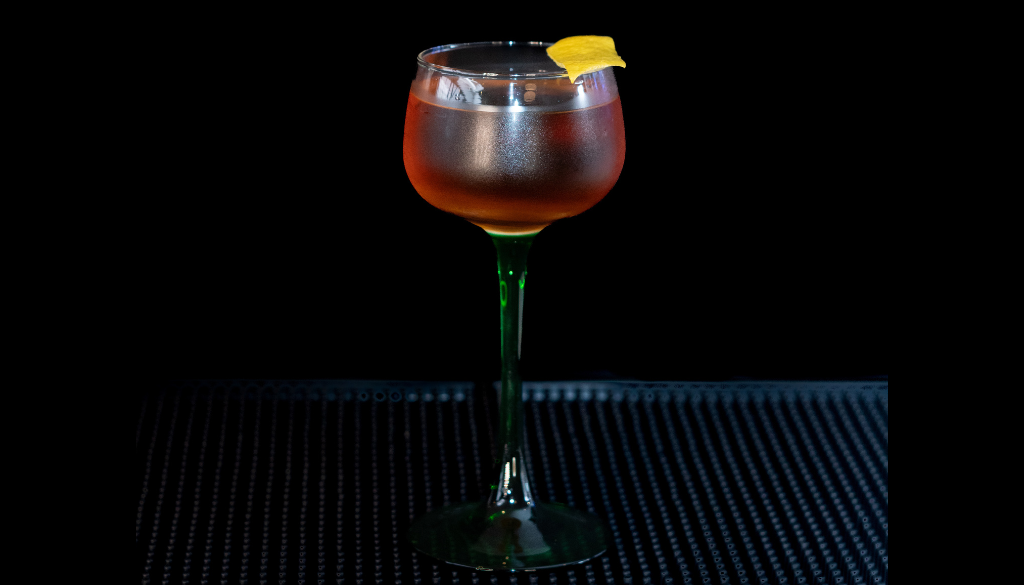
At its core, the Martinez cocktail is a classic stirred gin cocktail that predates the modern Martini and helped shape what we now think of as the “classic cocktail formula.”
It’s built around four key players:
- Gin (traditionally Old Tom style)
- Sweet vermouth
- Maraschino liqueur
- Orange bitters
- Finished with a lemon twist garnish
Simple on paper. Surprisingly nuanced in the glass.
When properly balanced, the Martinez delivers that beautiful silky texture and layered botanical complexity that cocktail nerds (hi, hello, it’s us) absolutely live for.
So… What Does a Martinez Taste Like?
If you’ve never had one, here’s the honest Worthington’s Bar breakdown.
The Martinez is:
- Lightly sweet (but not dessert-sweet)
- Herbal and botanical
- Gently fruity from the maraschino
- Silky and spirit-forward
- Aromatic and elegant
It opens with soft juniper and vermouth herbs, then the maraschino sneaks in with this subtle cherry-nut complexity that makes you go:
“Okay wait… what is that note?”
And then the citrus oils from the lemon twist lift everything right at the finish.
It’s a quiet show-off of a cocktail.
Martinez vs Martini
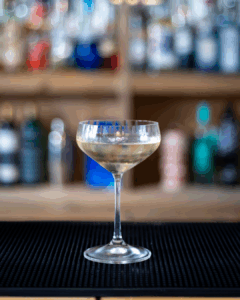
Think of the Martinez as the Martini’s slightly richer, more romantic ancestor.
Martinez:
- Sweeter
- More aromatic
- Rounder mouthfeel
- More 19th-century energy
Martini:
- Drier
- Sharper
- More minimalist
- More modern profile
If the Martini shows up in a perfectly tailored black suit…
…the Martinez is wearing vintage velvet and somehow pulling it off.
Both iconic. Very different moods.
Why the Martinez Still Belongs in Your Home Bar
Here’s the thing.
In today’s world of ultra-dry Martinis and punchy modern cocktails, the Martinez offers something refreshingly different:
- It’s approachable for people who find Martinis too dry
- It showcases Old Tom gin beautifully
- It teaches proper stirred cocktail technique
- It connects you directly to classic cocktail history
And if you’re serious about building out your home bar classics, this drink absolutely earns its place in the rotation.
Plus, and this is important, it just feels cool to make.
How the Martinez Compares to Other Classic Cocktails
If you’re building out your home bar classics lineup, the Martinez sits in a fascinating spot in cocktail history, right at the turning point between the richer 19th-century style and the drier, more minimalist drinks that followed.
To really appreciate the Martinez, it helps to understand the Golden Age of Cocktails (roughly 1860–1920). This was the era when bartending first became a true craft. Drinks were:
- More aromatic
- More vermouth-forward
- Slightly sweeter than many modern classics
- Built for slow sipping rather than sharp refreshment
The Martinez is a perfect snapshot of that moment in time, and you can taste the transition happening in the glass.
Let’s place it among its most important relatives.
Martinez vs. Martini
This is the comparison most people are curious about, and for good reason.
Martinez → sweeter, rounder, more aromatic
Martini → drier, sharper, more minimalist
The Martinez is widely considered one of the Martini’s direct ancestors. Over time, drinkers’ preferences shifted toward drier profiles, sweet vermouth was reduced or swapped for dry vermouth, and the modern Martini was born.
Think of the Martinez as the Martini’s more romantic, old-world predecessor.
If you find modern Martinis a bit too sharp, the Martinez may be exactly your speed.
👉 Find the Classic Martini Recipe here.
Martinez vs. Manhattan
Here’s where the family resemblance becomes crystal clear.
Martinez → gin-based, botanical, lightly fruity
Manhattan → whiskey-based, richer, deeper
Structurally, these two are very close:
- Base spirit
- Sweet vermouth
- Bitters
- Stirred and spirit-forward
The key difference is simply the base spirit. Swap whiskey for gin and add a touch of maraschino, and you’re firmly in Martinez territory.
If you love the Manhattan but want something more botanical and slightly lighter, the Martinez is a beautiful next step.
👉 Find the Manhattan Recipe here.
Martinez vs. Old Fashioned

The Old Fashioned sits one generation earlier in the cocktail timeline and represents the true foundation of spirit-forward drinks.
Martinez → vermouth-driven, aromatic complexity
Old Fashioned → spirit + sugar + bitters simplicity
Where the Old Fashioned is minimalist and punchy, the Martinez reflects the moment bartenders began layering in fortified wines and additional modifiers to create more nuanced profiles.
You can think of the Martinez as part of the evolutionary leap that eventually gave us the Manhattan and Martini families.
👉 Find the Old Fashioned Recipe here.
Martinez vs. Boulevardier
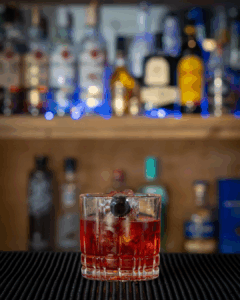
The Boulevardier arrives later in cocktail history (1920s) and represents the bitter, Negroni-adjacent branch of the family.
Martinez → elegant, lightly sweet, botanical
Boulevardier → bold, bitter, whiskey-forward
While not a direct descendant, both drinks appeal to fans of spirit-forward, stirred classics. If your palate eventually starts craving more bitterness and weight, the Boulevardier is a natural progression.
But historically speaking, the Martinez lives closer to the Manhattan–Martini evolutionary line.
👉 Find the Boulevardier Recipe here.
Martinez Ingredient Breakdown
🥃 The Gin – Old Tom Style Matters
Traditionally, the Martinez uses Old Tom gin, a slightly sweeter, rounder style of gin that was popular in the 19th century.
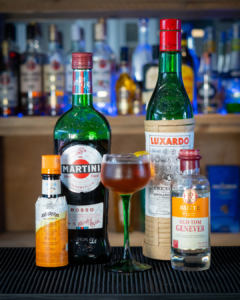
At our home bar, we used:
Rutte’s Old Simon Genever
It’s technically a genever, but stylistically it sits beautifully in that Old Tom space, with:
- Gentle sweetness
- Malt depth
- Soft botanical profile
And honestly? It works wonderfully in a Martinez.
Other Great Gin Options
If you can’t find Old Simon or Old Tom, here are solid alternatives:
Old Tom style (most authentic):
- Hayman’s Old Tom Gin
- Ableforth’s Bathtub Gin Old Tom
- Cotswolds Old Tom Gin
If using London Dry (less traditional but workable):
- Tanqueray London Dry Gin
- Beefeater London Dry Gin
- Bombay Sapphire
👉 Worthington’s tip: If using London Dry, the drink will taste drier and sharper. Still good, just different.
🍷 The Sweet Vermouth – The Backbone
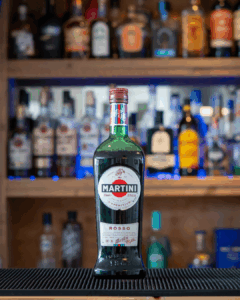
Sweet vermouth brings:
- Herbal depth
- Gentle sweetness
- Structure
- Balance
We used:
Martini Rosso
It’s widely available and perfectly serviceable for home bar use.
Other Excellent Sweet Vermouth Options
If you want to experiment or upgrade:
- Dolin Rouge (great balance)
- Carpano Antica Formula (richer, more vanilla-forward)
- Cocchi Vermouth di Torino (complex and elegant)
👉 Home bar note: Once opened, sweet vermouth belongs in the fridge!
🍒 The Maraschino Liqueur – The Quiet Game-Changer
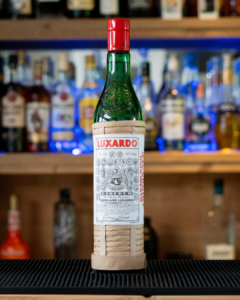
This is the ingredient that makes the Martinez unmistakably… the Martinez.
Maraschino liqueur adds:
- Subtle cherry notes
- Nutty complexity
- Light sweetness
- Aromatic lift
We used:
Luxardo Maraschino Liqueur
Which is pretty much the gold standard behind most serious bars.
Other Options
If Luxardo isn’t available:
- Maraska Maraschino
- Lazzaroni Maraschino
Just avoid bright red “cherry syrup” style products, not the same thing at all.
🍊 The Orange Bitters – Small but Mighty
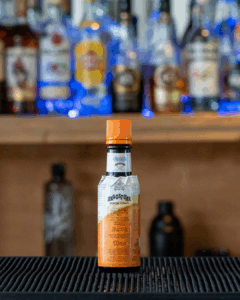
Orange bitters are the seasoning of this cocktail.
They add:
- Citrus brightness
- Aromatic lift
- Structure
- Balance
We used:
Angostura Orange Bitters
Reliable, balanced, and widely available.
Other Bitters Worth Trying
- Regans’ Orange Bitters No. 6
- Fee Brothers Orange Bitters
- The Bitter Truth Orange Bitters
Even a dash makes a noticeable difference here.
🍋 The Lemon Twist – The Finishing Touch
Never skip the garnish on a Martinez.
Expressing lemon peel over the drink adds:
- Bright citrus oils
- Aromatic freshness
- A cleaner finish
It lifts the entire cocktail and keeps the richness from feeling heavy.
Small move. Big impact.
Old Tom Gin vs London Dry: What’s the Difference?
If you’ve been exploring classic cocktails, you’ve probably seen Old Tom gin pop up and wondered what the deal is.
Here’s the quick breakdown.
Old Tom Gin
Historically popular in the 1800s, Old Tom sits stylistically between genever and modern London Dry.
Typically:
- Slightly sweeter
- Rounder mouthfeel
- Softer juniper
- More cocktail-friendly for vintage recipes
👉 This is why Old Tom is the traditional choice for the Martinez.
London Dry Gin
This is the modern standard most people know.
Typically:
- Drier
- Sharper
- More juniper-forward
- More minimalist
It absolutely works in a Martinez, but the drink will taste noticeably different.
Which Should You Use?
For historical accuracy: Old Tom
For a drier modern twist: London Dry
For a Dutch home bar flex: Rutte’s Old Simon Genever works beautifully
Pro Tips for the Perfect Martinez
The Martinez may look simple on paper, but the difference between good and wow, okay bartender energy comes down to technique.
Here’s how we level it up at Worthington’s Bar.
Stir — Don’t Shake
This is a fully spirit-forward cocktail.
That means:
- Stirring keeps the texture silky
- Prevents over-dilution
- Maintains clarity
- Preserves the aromatics
Shake it and you’ll cloud the drink and thin the mouthfeel.
👉 Rule of thumb: if it’s all spirits, stir it.
Use Plenty of Ice
Tiny ice = sad dilution.
Fill your mixing glass generously so the drink chills quickly without watering down too fast. Big, solid cubes are your best friend here.
Express the Lemon Properly
The garnish is not decoration, it’s functional.
When you express the lemon peel over the glass, you’re adding essential oils that:
- Brighten the botanicals
- Lift the aroma
- Balance the richness
👉 Pro move: express the peel skin side facing the drink, then run it lightly around the rim.
Small detail. Massive upgrade.
Chill Your Glass
Because the Martinez is served up, temperature matters.
If you have time:
- Pop your coupe or Nick & Nora glass in the freezer
or - Fill it with ice water while you mix
That extra chill keeps the drink crisp longer.
Common Martinez Mistakes (and How to Avoid Them)
Even experienced home bartenders can miss the mark with the Martinez. Here are the most common slip-ups we see.
❌ Using Only London Dry Without Adjusting
London Dry works, but it changes the drink.
What happens:
- Less sweetness
- Sharper juniper
- Drier overall profile
Fix: If using London Dry, consider:
- Slightly increasing vermouth
- Or adding a tiny extra barspoon of maraschino
❌ Overpouring the Maraschino
This one is sneaky.
Maraschino is powerful. Too much and the drink becomes:
- Overly sweet
- Artificial-tasting
- Unbalanced
👉 In a Martinez, maraschino should whisper, not shout.
❌ Warm Vermouth
This is a big one for home bars.
Once opened, sweet vermouth oxidizes quickly.
Always store it in the fridge.
Fresh vermouth = vibrant Martinez
Warm, old vermouth = flat, tired cocktail
❌ Skipping the Proper Stir Time
Under-stirring leaves the drink:
- Too warm
- Too sharp
- Poorly integrated
👉 Aim for 20–30 seconds of smooth stirring.
🍷 The Martinez 🍷
Ingredients
- 45 ml Old Tom Gin
- 45 ml Sweet Vermouth
- 1 barspoon of Maraschino Liqueur
- 2 dashes of Orange Bitters
Garnish with a lemon twist
Instructions
- Add the ingredients to your cocktail mixing glass.
- Add (large) ice cubes.
- Stir well.
- Strain mixture into you chilled glass
- Garnish with the lemon twist.
- Enjoy!
Drink responsibly, don’t spill any! 😉
📸 Don’t forget to capture the magic of your Martinez creation and share it with us using #WorthingtonsBar. We can’t wait to see the joy and zest you bring to this classic! Cheers to the perfect balance of flavors and the timeless pleasure of a well-crafted cocktail! 🌟✨
Final Thoughts: An Old-School Classic Worth Rediscovering
The Martinez feels like stepping into cocktail history in the best possible way.
It’s refined without being fussy.
Complex without being intimidating.
And it quietly connects some of the most famous cocktails ever created.
At Worthington’s Bar, we love drinks like this, the ones that remind you great cocktails didn’t just appear fully formed. They evolved. They adapted. They told stories along the way.
If you’re building your classic cocktail repertoire at home, the Martinez is absolutely worth your time behind the bar.
From our home bar to yours,
Cheers. 🍸
Martinez Cocktail FAQ
Is the Martinez the same as a Martini?
No, but they’re closely related. The Martinez is widely considered a predecessor to the Martini. It uses sweet vermouth and maraschino liqueur, making it richer and more aromatic than the dry, minimalist Martini.
What gin is best for a Martinez?
Traditionally, Old Tom gin is preferred because of its slightly sweeter, rounder profile. However, London Dry gin and even genever (like Rutte Old Simon) can work well depending on your flavor preference.
Is the Martinez a strong cocktail?
Yes, it’s a spirit-forward stirred cocktail similar in strength to a Martini or Manhattan. It’s smooth and approachable, but it definitely has presence.
Can I make a Martinez without maraschino liqueur?
Technically yes, but it won’t be a true Martinez. Maraschino provides subtle cherry-nut complexity that is essential to the drink’s signature profile.
Why is my Martinez too sweet?
Common causes include:
- Using too much maraschino
- Using a very sweet vermouth
- Using Old Tom gin with an already sweet profile
Try slightly reducing the maraschino or switching vermouth brands.
Should a Martinez be shaken or stirred?
Always stirred. Because the drink is made entirely of spirits and liqueurs, stirring preserves the silky texture and clarity.
If you want to see the video tutorial on this drink, check it out here on our Instagram page! We would love to connect with you and hear about what recipe we should make next. 😁