The Pisco Sour
Classic South American Cocktail
The first time we heard someone passionately explain the Pisco Sour, we weren’t sitting in Lima or Santiago.
We were behind a laptop.
It was during an online mixology course, and it was Lynette Marrero who introduced us to this legendary South American cocktail. She spoke about its origin, its cultural significance, and the way pisco behaves differently from any other spirit behind the bar.
We were intrigued.
We made it.
Britt loved it immediately.
Joy loved the story… and really wanted to love the drink.
But sometimes flavor is personal.
And that’s okay.
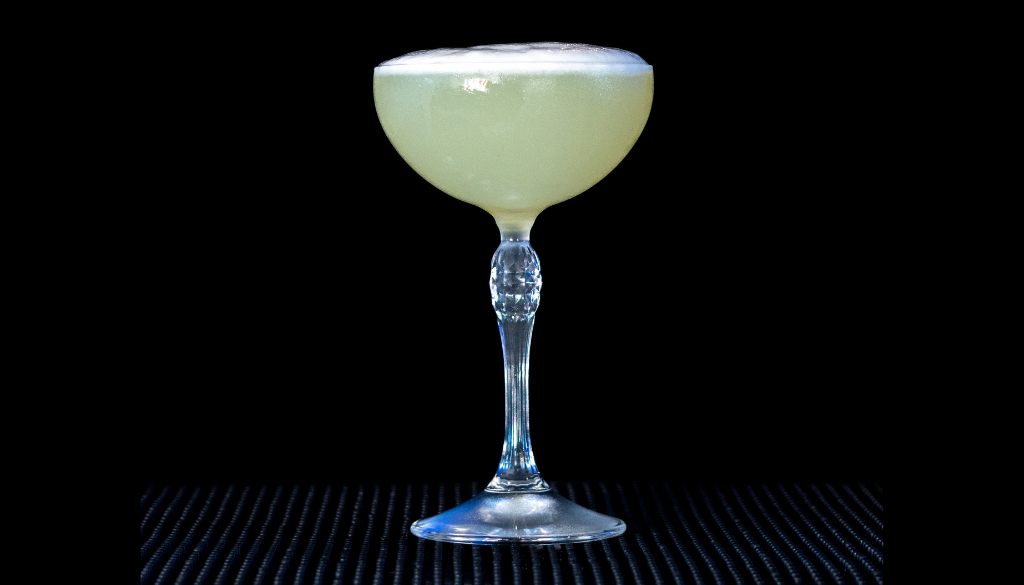
This Pisco Sour recipe is based on Lynette Marrero’s version (with one small adjustment we’ll explain below). It’s bright, citrus-forward, silky from the egg white and built around a spirit that deserves far more attention in European home bars.
From our home bar to yours, let’s dive in.
The Origin of the Pisco Sour
The Pisco Sour is one of South America’s most iconic cocktails, and one of its most passionately debated.
Both Peru and Chile proudly claim it as their national drink. And honestly? That tension only adds to the romance of it.
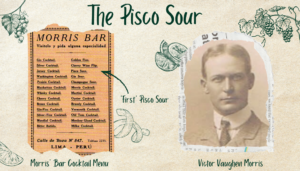
The most widely accepted origin story places the modern Pisco Sour in Lima, Peru, in the early 1900s. An American bartender named Victor Vaughen Morris opened Morris’ Bar in Lima and began serving a version of the Whiskey Sour made with local pisco instead of whiskey.
That substitution changed everything.
By replacing whiskey with pisco, Morris didn’t just swap spirits; he created a completely different flavor experience. The bright grape character of pisco, combined with fresh citrus and sugar, resulted in something lighter, more aromatic, and distinctly South American.
From there, the drink evolved. Peruvian bartenders refined the ratios, added egg white for texture, and eventually a few drops of bitters on top of the foam, a detail that has become visually iconic.
Meanwhile, Chile developed its own style, often slightly simpler and without egg white.
Today, the Pisco Sour is more than just a cocktail. In Peru it has its own national holiday. It’s served at celebrations, family gatherings, and official events. Its cultural identity in a coupe glass.
And structurally? It follows the timeless sour formula:
- Spirit
- Citrus
- Sweetener
- Egg white
It’s the same backbone as a Whiskey Sour or a Daiquiri variation, but pisco gives it a personality that’s impossible to replicate.
That grape distillate brings floral, fruity, and sometimes slightly earthy notes that transform what could be a simple sour into something layered and expressive.
Over time, the Pisco Sour moved from regional staple to global classic. Today, you’ll find it on cocktail menus worldwide, from Lima to London to Amsterdam.
And now, in your home bar.
What Is Pisco?
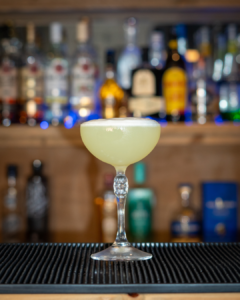
If you’ve never worked with pisco before, you’re not alone, especially here in the Netherlands, where options are still limited.
Pisco is a South American grape brandy made by distilling fermented grape juice (essentially wine). Unlike whiskey, rum, or cognac, pisco is typically unaged. It doesn’t spend time in oak barrels. Instead, it rests in neutral vessels like stainless steel or glass.
That means no wood influence. No vanilla from oak. No caramel coloring.
What you taste is the grape, pure and expressive.
And that’s what makes pisco fascinating.
Depending on the grape variety used and the production style, pisco can be:
- Floral and perfumed
- Bright and fruity
- Herbal and dry
- Slightly funky
- Or subtly earthy and nutty
Unlike neutral vodka, pisco has personality. It’s not trying to disappear in a cocktail. It wants to be part of the conversation.
If we had to compare it, we’d say it sits somewhere between:
- Grappa (because of its grape base)
- A very aromatic brandy
- And something entirely its own
But smoother than grappa. More cocktail-friendly. Less aggressive.
It’s a spirit that rewards attention, especially in a drink as structurally simple as a Pisco Sour.
The Different Types of Pisco
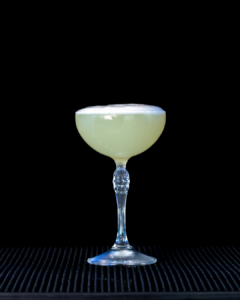
Pisco production varies between Peru and Chile, and regulations differ between the two countries. Without diving too deep into legal frameworks (we could, but we’ll behave), here are the main styles you’re likely to encounter, especially when searching for the best pisco for a Pisco Sour.
1. Quebranta (Non-Aromatic)
Quebranta is made from non-aromatic grapes and is the most traditional choice for a classic Peruvian Pisco Sour.
Flavor profile typically includes:
- Drier character
- More structure
- Subtle nuttiness
- Slight earthiness
- Less floral intensity
Because it’s less perfumed, Quebranta creates a Pisco Sour that feels balanced and grounded rather than overly fragrant. It lets the citrus and sweetness shine without competing.
For our recipe, we used Barsol Quebranta Pisco.
Why?
Because in the Netherlands, pisco availability is limited. We didn’t want to invest in a very expensive bottle for our first experience with the spirit, especially since we weren’t sure how we’d feel about it.
Barsol Quebranta was:
- Accessible
- Reasonably priced
- Widely recommended for classic Pisco Sours
It felt like the responsible home bar choice.
And honestly? For a first bottle, it delivered exactly what we needed.
2. Aromatic Varietals (Italia, Torontel, Moscatel)
These piscos are made from aromatic grape varieties.
That means:
- More floral intensity
- Pronounced fruit notes
- A more expressive nose
- A perception of sweetness, even if technically dry
Using an aromatic pisco in a Pisco Sour can make the drink feel more perfumed and lifted. Some people love that. Others prefer the structure of Quebranta.
If you enjoy floral spirits or more aromatic cocktails, this style might be worth exploring next.
3. Acholado (Blend)
Acholado is a blend of different grape varieties.
Think of it as the “balanced middle ground.”
These piscos can be:
- Complex
- Layered
- Harmonious
- Versatile
They often combine the structure of non-aromatic grapes with the brightness of aromatic ones.
If you’re experimenting at your home bar and want something flexible for multiple cocktails, Acholado can be a great option.
A Note on Availability (And Realistic Home Bars)
Lynette Marrero prefers Macchu Pisco for her Pisco Sour recipe.
We looked.
We couldn’t find it locally.
And that’s part of building a home bar in real life, not every recommended bottle is available in your region.
So we adapted.
Because the goal isn’t perfection.
The goal is to make great cocktails with what you can realistically access.
The Recipe (Based on Lynette Marrero’s Version)
This recipe follows the structure taught by Lynette Marrero, with one small adaptation.
Her version calls for gum syrup (also known as gomme syrup), which contains gum arabic for a silkier mouthfeel.
We didn’t have gum syrup.
So we used simple syrup instead.
And honestly? It worked beautifully.
Ingredient Breakdown (Because We Love Context)
A Pisco Sour is deceptively simple. Five ingredients. That’s it.
Which means every single one of them matters.
There’s nowhere to hide. No liqueurs to mask the imbalance. No heavy modifiers to correct mistakes. If something is off, you will taste it.
That’s exactly why we love it.
Let’s break it down properly.
🥃 The Pisco – The Star of the Show
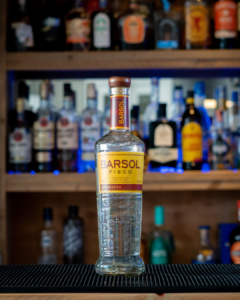
We used Bodegas BarSol Quebranta Pisco for our version.
As mentioned earlier, Quebranta is a non-aromatic grape variety, which makes it slightly more structured and less floral than aromatic Piscos. In practical terms, that means your Pisco Sour will lean more toward:
- Clean grape character
- Subtle nuttiness
- A slightly earthy backbone
- Less perfume, more depth
Instead of dominating the drink with floral intensity, Quebranta provides structure. It lets the citrus shine while still reminding you that this is very much a grape distillate.
If you’re new to pisco, Quebranta is honestly a fantastic starting point. It feels balanced and approachable, especially if you typically enjoy brandy, cognac or even aged rum.
Now, if you can find Macchu Pisco, Lynette Marrero’s preference, it’s absolutely worth trying side by side for comparison. Different pisco brands and grape varieties can completely shift the personality of the drink. A more aromatic style will create a brighter, more perfumed Pisco Sour with lifted floral notes.
That’s the beauty of this cocktail: same structure, completely different character depending on the spirit.
And for us in the Netherlands, where pisco options are limited, working with what’s available is part of the home bar journey. You don’t need the rarest bottle; you just need a good one.
🍋 The Citrus – Fresh Means Fresh
This part is non-negotiable.
You absolutely must use freshly squeezed lemon and lime juice.
Not bottled.
Not concentrate.
Not “it’s been in the fridge for a week, but it’s probably fine.”
Fresh citrus brings:
- Bright, lively acidity
- Natural oils from the peel
- Clean, sharp aromatics
- Real balance
Store-bought citrus juice often tastes flat, muted, or slightly metallic. And in a cocktail as stripped back as a Pisco Sour, you will notice it immediately.
The citrus here doesn’t just add sourness, it shapes the entire structure of the drink. The lemon adds brightness and clarity. The lime brings depth and a slightly greener edge. Together, they create that razor-sharp but silky balance that defines a great Pisco Sour.
This drink lives and dies on citrus balance.
Fresh only.
If you’re already putting in the effort to dry shake and strain beautifully, don’t sabotage it with bottled juice.
🍬 The Sweetener – Simple vs Gum Syrup
The recipe we followed, from Lynette Marrero, calls for gum syrup (also known as gomme syrup).
Gum syrup includes gum arabic, which adds extra viscosity and creates a smoother, slightly richer mouthfeel. It doesn’t just sweeten, it enhances texture. Historically, it was common in classic sours and punches for exactly that reason.
We didn’t have gum syrup at our home bar.
So we used classic simple syrup instead.
And honestly? It works beautifully.
You can:
- Make your own (1:1 sugar to hot water, stir until dissolved, let cool)
- Or use a quality commercial option like Monin Cane Sugar Syrup
Simple syrup keeps the drink balanced without overpowering the grape notes of the pisco. It softens the citrus just enough to make everything harmonious without turning the cocktail into dessert.
If you ever want to level up the texture, experimenting with gum syrup can absolutely enhance the silkiness of the drink. But it’s not essential, especially when you’re just getting to know pisco.
Balance first. Texture upgrades later.
🥚 The Egg White – Texture & Foam
Egg white doesn’t add flavor.
It adds structure.
When shaken properly, first a dry shake (without ice) to build foam, then a second shake with ice to chill and dilute, it creates:
- A silky mouthfeel
- A stable foam layer
- That signature velvety top
And that foam isn’t just there to look pretty for Instagram.
It actually softens the acidity, rounds out the citrus edges, and integrates the sweetness more seamlessly into the spirit. Without egg white, the drink would feel sharper and more angular. With it, everything becomes cohesive.
The Pisco Sour without egg white? Still good.
With egg white? Luxurious.
If you’re hesitant about raw egg white, always use very fresh eggs and practice good hygiene. The alcohol and acidity create an environment that lowers risk, but common sense always applies.
And if texture is what makes or breaks a cocktail for you, this is where the magic happens.
When you step back and look at it, the Pisco Sour is a masterclass in balance:
Strong but elegant.
Bright but smooth.
Simple but layered.
And because every ingredient plays such a defined role, tweaking even one component, different pisco, slightly more lime, richer syrup, can shift the entire personality of the drink.
Which might be exactly how we eventually convert Joy. 🍸
🍇 The Pisco Sour 🍇
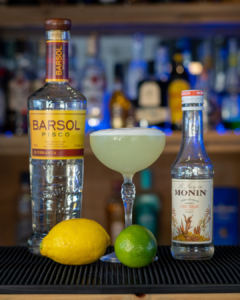
Ingredients
- 60 ml pisco
- 15 ml lemon juice
- 15 ml lime juice
- 22.5 ml simple syrup
- 1 egg white
Garnish with Angostura bitters.
Instructions
- Add all ingredients into your shaker.
- Shake well to get your drink frothy.
- Add ice cubes into your shaker.
- Shake again.
- Strain mixture into your chilled glass.
- Garnish with 1-2 drops of Angostura bitters.
- Enjoy!
📸 Don’t forget to capture the magic of your Pisco Sour creation and share it with us using #WorthingtonsBar. We can’t wait to see the joy and zest you bring to this South American classic! Cheers to the perfect balance of flavors and the timeless pleasure of a well-crafted fresh cocktail! 🌟✨
Our Honest Take
Britt loved it immediately.
She enjoyed:
- The bright citrus
- The silky foam
- The way the grape notes from the pisco came through
Joy? She appreciated the history. The craftsmanship. The structure.
She understood why the flavors work together.
But it just wasn’t her drink.
And that’s part of cocktail culture too: not every classic will be your personal favorite.
So here’s where we invite you in:
If you love a Pisco Sour and have tips on how we could tweak it, adjust ratios, try a different pisco style, add bitters, change sweetness, let us know.
Convince Joy.
We’re open to being converted.
Pisco Sour FAQ
What is a Pisco Sour?
A Pisco Sour is a classic South American cocktail made with pisco (a grape brandy), fresh citrus juice, simple syrup, and egg white. It follows the traditional sour template: spirit, citrus, sweetener, and foam. The result is a silky, balanced cocktail with bright acidity and a smooth texture.
Is the Pisco Sour from Peru or Chile?
Both Peru and Chile claim the Pisco Sour as their national cocktail. The most widely accepted origin story places it in Lima, Peru, in the early 1900s, where bartender Victor Vaughen Morris adapted a whiskey sour using local pisco.
Today, it’s deeply rooted in Peruvian cocktail culture, but Chile also has its own variation and strong pisco tradition.
What does a Pisco Sour taste like?
A well-made Pisco Sour tastes:
- Bright and citrus-forward
- Smooth and slightly creamy from the egg white
- Lightly sweet but balanced
- Grape-driven with subtle floral or nutty notes (depending on the pisco)
It’s refreshing but structured, elegant rather than heavy.
What is pisco?
Pisco is an unaged South American grape brandy made by distilling fermented grape juice (wine). Unlike whiskey or cognac, it is not aged in wood, which keeps the flavor vibrant and aromatic.
Depending on the grape variety used, pisco can be floral, fruity, herbal, earthy, or slightly nutty.
What is the best pisco for a Pisco Sour?
Traditionally, Peruvian Quebranta pisco is used for a classic Pisco Sour because it provides structure and balance without overpowering floral notes.
We used Bodegas BarSol Quebranta Pisco, which is widely recommended for beginners.
If you can find Macchu Pisco, that’s a preferred option by bartender Lynette Marrero and worth comparing.
Can you make a Pisco Sour without egg white?
Yes, you can make a Pisco Sour without egg white, but the texture will be different.
Without egg white:
- The drink will be sharper
- Less silky
- No foam layer
With egg white:
- Creamier mouthfeel
- Balanced acidity
- Classic velvety finish
If you prefer not to use raw egg white, you can experiment with aquafaba (chickpea water) as a plant-based alternative.
Can I use bottled lemon or lime juice?
Technically yes. Should you? No.
Freshly squeezed lemon and lime juice are essential for a proper Pisco Sour. Bottled citrus juice often tastes flat or metallic and lacks the aromatic oils that fresh juice provides. In a minimalist cocktail like this, quality citrus makes a massive difference.
What is the difference between a Pisco Sour and a Whiskey Sour?
Both cocktails follow the same sour structure (spirit, citrus, sweetener, egg white). The difference lies in the base spirit.
- Whiskey Sour → warm, oak-driven, sometimes caramel notes
- Pisco Sour → fresh, grape-forward, floral or earthy
The Pisco Sour is generally lighter and more aromatic than its whiskey counterpart.
Why is my Pisco Sour not foamy?
Foam issues usually come from one of these:
- Not dry shaking first
- Not shaking hard enough
- Using too little egg white
- Old eggs
For best results:
- Dry shake (no ice) for 10–15 seconds
- Add ice
- Shake again until well chilled
- Fine strain
That second shake with ice helps stabilize the foam and chill the drink properly.
How strong is a Pisco Sour?
A standard Pisco Sour with 60 ml (2 oz) of pisco is similar in strength to most classic cocktails like a Margarita or Daiquiri. It’s spirit-forward but balanced by citrus and sweetness, making it feel smoother than its alcohol content suggests.
Is a Pisco Sour sweet?
It should be balanced, not sweet.
The simple syrup softens the citrus but should never dominate the drink. If your Pisco Sour tastes overly sweet, reduce the syrup slightly or increase the citrus to restore balance.
If you want to see the video tutorial on this drink, check it out here on our Instagram page! We would love to connect with you and hear about what recipe we should make next. 😁